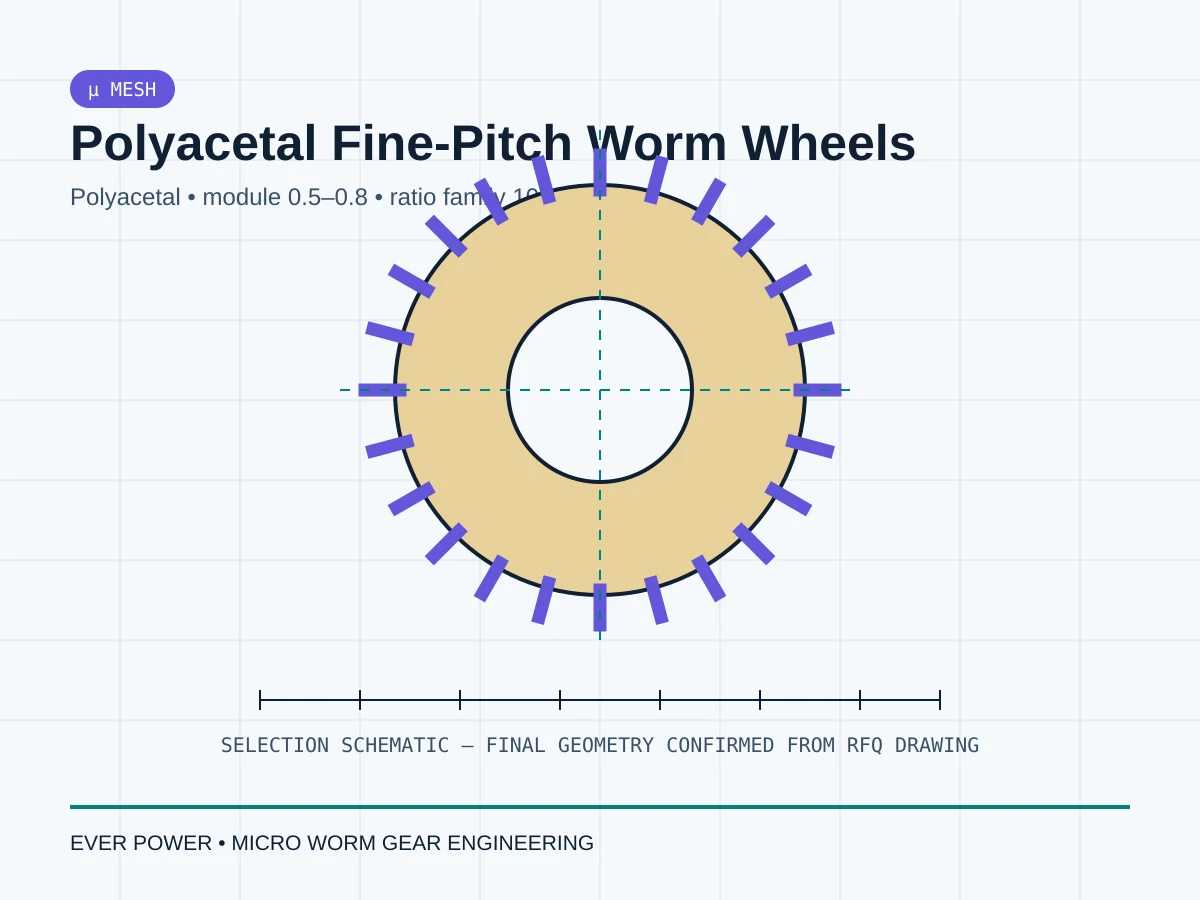
คำอธิบาย
ขอบเขตทางวิศวกรรม
ตระกูลพอลิเมอร์นี้มีความเกี่ยวข้องอย่างยิ่งกับกลไกหนอนขนาดเล็กอย่างแท้จริง เนื่องจากช่วงระยะห่างของเกลียวที่ได้รับการตรวจสอบแล้วนั้นจำกัดอยู่ที่โมดูล 0.5–0.8 พฤติกรรมของพอลิเมอร์มีความไวต่ออุณหภูมิ แรงกด ความเร็ว ความชื้น และการประกอบ ดังนั้นควรระบุเงื่อนไขการใช้งานเหล่านั้นก่อนการอนุมัติวัสดุ
ค่าด้านล่างนี้อธิบายถึงกลุ่มผลิตภัณฑ์อ้างอิงที่ได้รับการตรวจสอบแล้ว หรือสำหรับงานสั่งทำพิเศษ ข้อมูลที่ต้องกำหนดก่อนการผลิต ค่าเหล่านี้เป็นเพียงขอบเขตการเลือก ไม่ใช่คำมั่นสัญญาว่าจะมีสินค้าทุกแบบให้เลือก EVER POWER จะยืนยันแบบร่างขั้นสุดท้าย คู่ชิ้นส่วน และกระบวนการผลิตในขั้นตอนการเสนอราคา
พารามิเตอร์อ้างอิงของครอบครัว
| ช่องเลือก | หลักเกณฑ์อ้างอิงครอบครัว / RFQ |
|---|---|
| ตระกูลโมดูลอ้างอิง | 0.5–0.8 |
| กลุ่มอัตราส่วนความเร็วอ้างอิง | 10–60 |
| กลุ่มวัสดุ | โพลีอะซีทัล |
| การอบด้วยความร้อน | ไม่มี |
| ผิวฟัน | ตัด / ไม่บด |
| กลุ่มผลิตภัณฑ์อ้างอิงความแม่นยำ | ชั้นประถมศึกษาปีที่ 5 |
| ครอบครัวผสมพันธุ์ทั่วไป | หนอนเหล็กหรือสแตนเลส |
สำคัญ: อย่าเลือกเฟืองตัวหนอนและเฟืองล้อโดยพิจารณาจากโมดูลเพียงอย่างเดียว จำนวนฟันเฟือง ทิศทางเกลียว อัตราส่วน ระยะห่างระหว่างศูนย์กลาง ระบบฟัน และรูปทรงการติดตั้ง ต้องเข้ากันได้อย่างลงตัว
สถานที่ใช้งานผลิตภัณฑ์ตระกูลนี้
เฟืองตัวหนอนขนาดเล็กมีประโยชน์เมื่อผู้ออกแบบต้องการส่งกำลังในมุมฉากและลดขนาดโดยรวมลงอย่างมาก บริบทโครงการทั่วไปสำหรับเฟืองตระกูลนี้ ได้แก่:
- ไดรฟ์เครื่องมือขนาดเล็ก
- กลไกขนาดกะทัดรัดสำหรับผู้บริโภคหรือสำนักงาน
- ระบบปรับโหลดต่ำ
- ขั้นเกียร์แอคชูเอเตอร์สำหรับงานเบา
ตัวอย่างการใช้งานอธิบายถึงบริบททางวิศวกรรมทั่วไป ไม่ใช่การรับรองความเหมาะสม ภาระ ความเร็ว การใช้งาน สารหล่อลื่น อุณหภูมิ และข้อกำหนดด้านความปลอดภัยยังคงเป็นข้อมูลป้อนเข้าของโครงการ
การปรับแต่งและการตรวจสอบแบบร่าง
เพื่อให้ได้ใบเสนอราคาที่มีประโยชน์ โปรดระบุรายการที่ควบคุมอินเทอร์เฟซและโครงข่าย เราสามารถตรวจสอบได้ดังนี้:
- โมดูล จำนวนฟัน และอัตราส่วน
- รูเจาะ ดุม และคุณสมบัติป้องกันการหมุน
- วัสดุและการตกแต่งหนอนผสมพันธุ์
- ช่วงอุณหภูมิการทำงาน
- รอบการทำงานและแผนการหล่อลื่น
- การตรวจสอบการคลายตัวและมิติ
หากมีชิ้นส่วนที่เข้ากันได้อยู่แล้ว โปรดแนบภาพวาดหรือตัวอย่างที่ควบคุมได้ สำหรับงานเปลี่ยนชิ้นส่วน โปรดระบุทิศทางการหมุน ระยะห่างจากจุดศูนย์กลางที่ติดตั้ง และภาพถ่ายของตาข่ายเดิมหากมี
รายการตรวจสอบการตรวจสอบและคำขอใบเสนอราคา
เรขาคณิต
- ระบบโมดูลหรือระบบระยะห่าง
- หนอนเริ่มและมือ
- อัตราส่วนจำนวนฟันล้อ / เป้าหมาย
- ระยะห่างศูนย์กลาง
- ขนาดของเพลา รูเจาะ และดุม
ข้อมูลการดำเนินงาน
- ความเร็วอินพุตและแรงบิดเอาต์พุตที่คาดหวัง
- รอบการทำงานและความถี่กลับทิศทาง
- วิธีการหล่อลื่น
- อุณหภูมิและสภาพแวดล้อม
- ปริมาณที่ต้องการและปลายทาง
การแลกเปลี่ยนข้อดีข้อเสียในการเลือก
ควรเลือกใช้เฟืองตัวหนอนขนาดเล็กเป็นระบบ การเพิ่มอัตราทด การลดขนาดขอบเขต การเปลี่ยนจำนวนรอบการกลึง การปรับระยะห่าง หรือการเปลี่ยนวัสดุของล้อ อาจเปลี่ยนแปลงสภาวะการสัมผัส ปฏิกิริยาของแบริ่ง การเกิดความร้อน และความสามารถในการผลิตไปพร้อมกัน ดังนั้น เอกสารขอใบเสนอราคา (RFQ) ที่ใช้งานได้จริงจึงควรรวมถึงฟังก์ชันเป้าหมายและข้อจำกัดทางกลที่กำหนดไว้ แทนที่จะระบุเพียงฟิลด์ในแคตตาล็อกเพียงอย่างเดียว
เมื่อพื้นที่จำกัดมาก ให้กำหนดขนาดที่ใช้ในการประกอบชิ้นส่วนก่อนเป็นอันดับแรก ได้แก่ แกนเพลา ที่นั่งแบริ่ง รูล้อ/จุดอ้างอิงดุมล้อ และระยะห่างระหว่างศูนย์กลาง รูปทรงภายนอกที่ไม่เกี่ยวข้องกับการทำงานสามารถพิจารณาได้ในภายหลัง เมื่อความแม่นยำมีความสำคัญ ให้กำหนดค่าความคลาดเคลื่อนที่มองเห็นได้ที่เอาต์พุตของกลไก เพื่อให้สามารถจัดสรรค่าความคลาดเคลื่อนของฟันเฟืองและการติดตั้งได้อย่างชาญฉลาด
การวางแผนการผลิตและคุณภาพ
การวางแผนการผลิตขึ้นอยู่กับความพร้อมของวัสดุ การเตรียมการกลึงหรือเจาะ การสร้างฟัน การอบชุบความร้อน การตกแต่งขั้นสุดท้าย และการตรวจสอบ ฟันเฟืองแบบเจียรมีเส้นทางการผลิตที่แตกต่างจากฟันเฟืองแบบตัด ในขณะที่ล้อบรอนซ์และล้อโพลีเมอร์ใช้วัสดุและการควบคุมการตัดเฉือนที่แตกต่างกัน ใบเสนอราคาจะระบุเส้นทางการผลิตที่เสนอหลังจากตรวจสอบแบบและปริมาณแล้ว
สำหรับตัวอย่าง ให้บันทึกการปรับแต่งการประกอบใดๆ ที่ทำระหว่างการทดลอง หากมีการเปลี่ยนแปลงแผ่นรองปรับระดับ แรงกดล่วงหน้าของแบริ่ง การหล่อลื่น หรือตำแหน่งของชิ้นส่วนที่ประกบกันเพื่อให้ตัวอย่างใช้งานได้ ให้ปรับปรุงสภาพการประกอบที่ได้รับการอนุมัติก่อนการผลิตซ้ำ สำหรับคำสั่งซื้อที่เกิดขึ้นซ้ำ ให้ระบุลักษณะเฉพาะที่จำเป็นต้องมีบันทึกเป็นชุด เพื่อให้การตรวจสอบมีความสม่ำเสมอและมีประสิทธิภาพ
คำถามด้านวิศวกรรมที่พบบ่อย
ฉันสามารถสั่งซื้อเฉพาะตัวหนอนหรือเฉพาะล้อได้ไหม?
ใช่ แต่ยังต้องระบุชิ้นส่วนที่เข้าคู่กันที่มีอยู่ก่อน กรุณาส่งแบบร่าง ระบบโมดูล/ระยะห่าง จำนวนฟัน หรือจำนวนฟันทั้งหมด ทิศทางการหมุน และระยะห่างระหว่างศูนย์กลางที่ติดตั้ง เพื่อตรวจสอบความเข้ากันได้
คุณสามารถยกตัวอย่างจากชิ้นงานที่ผ่านการใช้งานแล้วได้หรือไม่?
ตัวอย่างช่วยได้ แต่การสึกหรออาจทำให้ความหนาและขนาดภายนอกของฟันผิดเพี้ยนไปได้ ขนาดของตัวเรือน ชิ้นส่วนประกบที่ไม่สึกหรอ หรือแบบร่างต้นฉบับจะช่วยเพิ่มความมั่นใจในการวิเคราะห์ย้อนกลับได้
หนอนตัวจิ๋วคู่หนึ่งสามารถถือว่ามีลักษณะล็อคตัวเองได้หรือไม่?
ข้อความทั่วไปในแคตตาล็อกไม่ควรนำมาใช้เป็นข้อสันนิษฐานด้านความปลอดภัย การหมุนย้อนกลับขึ้นอยู่กับรูปทรงเรขาคณิต แรงเสียดทาน การหล่อลื่น น้ำหนักบรรทุก การสั่นสะเทือน และการสึกหรอ ควรใช้วิธีการยึดจับที่ได้รับการตรวจสอบแล้วเมื่อจำเป็นต้องป้องกันการเคลื่อนที่ย้อนกลับ