توضیحات
دامنه مهندسی
کرمهای ضد زنگ زمانی مفید هستند که محیط، روال تمیز کردن یا مواد مجاور، فولاد کربنی معمولی را کمتر جذاب میکنند. انتخاب مواد تنها بخشی از تصمیم است: سازگاری روانکننده، جنس چرخ، دمای تماس و پرداخت مورد نیاز نیز نیاز به بررسی دارند.
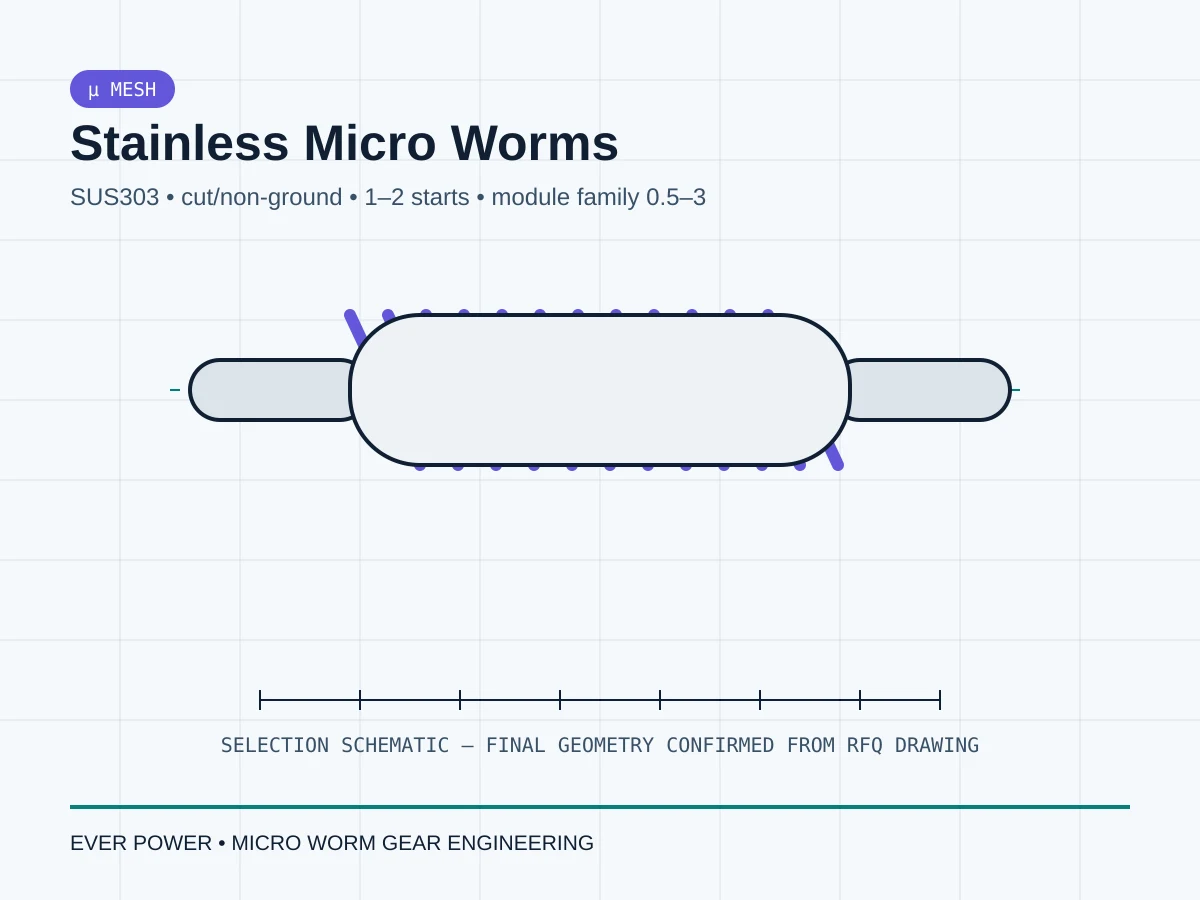
مقادیر زیر یک خانواده مرجع تأیید شده یا برای کارهای سفارشی، اطلاعاتی را که باید قبل از تولید تعریف شوند، توصیف میکنند. آنها مرزهای انتخاب هستند، نه وعدهای مبنی بر اینکه هر ترکیب موجود است. شرکت EVER POWER در مرحله استعلام قیمت، نقشه نهایی، جفت جفت و مسیر تولید را تأیید میکند.
پارامترهای خانواده مرجع
| فیلد انتخاب | خانواده مرجع / اساس RFQ |
|---|---|
| خانواده ماژول مرجع | ۰.۵–۳ |
| تعداد شروعها | ۱–۲ |
| خانواده مواد | SUS303 |
| عملیات حرارتی | هیچ کدام در خانواده مرجع نیستند |
| روکش دندان | برش / غیر زمینی |
| خانواده دقت مرجع | کلاس چهارم |
| خانوادههای جفتگیری معمولی | چرخهای حلزونی پلیمری برنزی یا گام ریز |
مهم: حلزونی و چرخ را به صورت مستقل و تنها بر اساس ماژول انتخاب نکنید. تعداد استارتها، عقربه مارپیچ، نسبت، فاصله مرکز، سیستم دندانه و هندسه نصب باید یک جفت سازگار تشکیل دهند.
کجا از این خانواده محصول استفاده میشود
چرخدندههای میکروکروم زمانی مفید هستند که طراح به انتقال قدرت با زاویه قائمه و کاهش قابل توجه در یک محفظه فشرده نیاز داشته باشد. زمینههای معمول پروژه برای این خانواده عبارتند از:
- محفظههای ابزار دقیق
- مکانیسمهای آزمایشگاهی
- زیر مجموعههای تجهیزات بستهبندی
- اتوماسیون داخلی تمیز
مثالهای کاربردی، زمینههای مهندسی رایج را توصیف میکنند، نه شایستگیهای تأیید شده را. بار، سرعت، وظیفه، روانکننده، دما و الزامات ایمنی، ورودیهای پروژه باقی میمانند.
شخصیسازی و بررسی نقاشی
برای یک پیشفاکتور مفید، مواردی را که رابط و مش را کنترل میکنند، شناسایی کنید. میتوانیم موارد زیر را بررسی کنیم:
- ماژول، استارت و عقربه
- رابط شفت یا سوراخ
- جفت شدن مواد چرخ
- شرایط سطح و میزان تمیز کردن
- تلرانسهای نشیمنگاه یاتاقان
- واکنش برگشتی و روش بازرسی
اگر یک قطعه جفت شونده از قبل وجود دارد، نقشه یا نمونه کنترل شده آن را ارائه دهید. برای کار جایگزین، در صورت وجود، جهت چرخش، فاصله مرکز نصب شده و عکسهایی از مش اصلی را نیز ارائه دهید.
چک لیست بازرسی و درخواست استعلام (RFQ)
هندسه
- ماژول یا سیستم گام
- کرم شروع می شود و دست
- نسبت تعداد دندانه چرخ / هدف
- فاصله مرکز
- ابعاد شفت، سوراخ و توپی
دادههای عملیاتی
- سرعت ورودی و گشتاور خروجی مورد انتظار
- چرخه وظیفه و فرکانس معکوس
- روش روغن کاری
- دما و محیط
- مقدار مورد نیاز و مقصد
بدهبستانهای انتخابی
یک جفت کرم کوچک باید به عنوان یک سیستم انتخاب شود. افزایش کاهش، کاهش پوشش، تغییر تعداد استارتها، سفت کردن لقی یا تعویض جنس چرخ میتواند شرایط تماس، واکنشهای یاتاقان، تولید گرما و قابلیت تولید را همزمان تغییر دهد. بنابراین، یک RFQ عملی شامل تابع هدف و محدودیتهای مکانیکی ثابت است، نه اینکه یک فیلد کاتالوگ را به صورت جداگانه مشخص کند.
وقتی فضا بسیار محدود است، ابتدا ابعادی را که مش را در خود جای میدهند، مشخص کنید: محورهای شفت، نشیمنگاه یاتاقان، مبنای سوراخ چرخ/توپی و فاصله مرکز. پروفیلهای بیرونی غیرکاربردی معمولاً میتوانند بعداً مورد بحث قرار گیرند. وقتی دقت اهمیت دارد، خطایی را که در خروجی مکانیزم قابل مشاهده است تعریف کنید تا تلرانسهای دندانه و نصب به طور هوشمندانه تخصیص داده شوند.
برنامهریزی تولید و کیفیت
برنامهریزی تولید به عواملی مانند در دسترس بودن مواد، تراشکاری یا آمادهسازی سوراخ، ایجاد دندانه، هرگونه عملیات حرارتی، پرداخت نهایی و بازرسی بستگی دارد. خانوادهی چرخهای حلزونی زمینی مسیر متفاوتی نسبت به چرخهای حلزونی برشخورده دارند، در حالی که چرخهای برنزی و پلیمری از مواد و کنترلهای ماشینکاری متفاوتی استفاده میکنند. پس از بررسی نقشه و کمیت، مسیر پیشنهادی در پیش فاکتور مشخص خواهد شد.
برای نمونهها، هرگونه تنظیم مونتاژ انجام شده در طول آزمایش را ثبت کنید. اگر برای کار کردن نمونه، شیمها، پیشبار یاتاقان، روانکاری یا موقعیت قطعات جفتشده تغییر داده شدهاند، قبل از تکرار تولید، وضعیت مونتاژ منتشر شده را بهروزرسانی کنید. برای سفارشهای مکرر، ویژگیهایی را که نیاز به ثبت دستهای دارند، شناسایی کنید تا تلاش بازرسی ثابت و مفید باقی بماند.
سوالات متداول مهندسی
آیا میتوانم فقط حلزونی یا فقط چرخ را سفارش دهم؟
بله، اما عضو جفت شونده موجود هنوز نیاز به شناسایی دارد. نقشه، سیستم ماژول/گام، تعداد استارت یا دندانه، فاصله مرکز عقربه و نصب شده آن را به اشتراک بگذارید تا سازگاری آن بررسی شود.
میشه از یه نمونه فرسوده قیمت بدید؟
یک نمونه کمک میکند، اما سایش میتواند ضخامت دندانه و ابعاد خارجی را تغییر دهد. ابعاد محفظه، یک قطعه جفت شده فرسوده نشده یا نقشه اصلی، اطمینان از مهندسی معکوس را افزایش میدهد.
آیا میتوان یک جفت میکروکرم را به عنوان خود قفل شونده در نظر گرفت؟
هیچ عبارت کلی در کاتالوگ نباید به عنوان فرض ایمنی استفاده شود. حرکت معکوس به هندسه، اصطکاک، روانکاری، بار، ارتعاش و سایش بستگی دارد. در صورت لزوم جلوگیری از حرکت معکوس، از یک روش نگهداری معتبر استفاده کنید.